

- Estate agents expect national property prices to increase by an average of 5% over the next 12 months
- 92% of agents describe current residential property prices as expensive or very expensive – up from 84% six months ago
- Just 6% consider that property represents fair value, down from 12% a year ago and 17% in 2024
- Almost two thirds of agents – 64% – believe prices are increasing but will level off soon – a further 18% believe they have peaked
- The report found that affordability challenges are intensifying for a first-time buyer couple earning a combined €113K
- The case study shows that while a couple could afford a 3-bed semi in Cork, the affordability gap in the Dublin commuter belt is up to €25K
- Report indicates that as smaller landlords continue to exit the rental market, ownership is concentrating among larger scale institutional providers
Tuesday 28 July 2026: Estate agents who are members of the Society of Chartered Surveyors Ireland (SCSI) expect national property prices to increase by an average of 5% over the next twelve months, a slight increase on the 4% forecast six months ago.
The findings of the latest SCSI Residential Mid-Year Market Monitor point to a market which is expensive, but one where price increases are expected to continue for the foreseeable future, albeit at more moderate levels compared to 2024 and 2025.
Ninety-two per-cent of agents believe current residential property prices are expensive or very expensive – up 8% since January – while just 6% believe they are currently fair value, down from 12% a year ago.
When asked where they believe we are in the market cycle, two out of three respondents (64%) believe prices are increasing but will level off soon – while 18% believe they have peaked and should start to decline.
Most agents reported stable or easier lending conditions in the residential market in the first six months of 2026. Almost half (48%) saw no change and a further 39% highlighted a slight improvement. That steady flow of credit is one of the main forces keeping purchasers’ activity firm.
The SCSI sales instruction index moved from negative to positive territory, -5% to +12% – indicating that more agents are experiencing an increase in sales instructions.
Emer Byrne, Vice President of the SCSI, says the report indicates that the Irish housing market continues to be characterised by an imbalance between supply and demand and ongoing affordability pressures.
“While housing completions have increased and agents report a modest improvement in sales instructions, the availability of housing stock on the private market continues to fall short of requirements across many regions. Despite a moderation from previous survey findings, the level of new housing supply continues to be viewed as the most important determinant of future house price movements. In H1 2026, 38% of agents cited the volume of new homes being built as the key factor shaping their 12-month house price expectations, while the next most commonly cited reason, changes in the state of the economy, was cited by 23% of agents.”
“The successful delivery of additional housing supply will depend on the timely provision of supporting infrastructure, including water services, transport and energy networks, together with policies that ensure development viability across a range of housing types and locations.”
“Overall, demand remains resilient, supported by stable labour market conditions, continued population growth and improving mortgage credit availability. Indeed, the strong take-up of finance maybe translating into price pressure rather than more accessible buying.”
“Agents continue to anticipate further house price increases over the coming 12 months, albeit at a more moderate pace than experienced in recent years.”
Current Affordability Scenarios
With property prices nationally having increased by circa 181% from their trough in early 2013, according to the CSO*, the SCSI included four scenarios involving a couple earning a combined gross income of €113,000 in the latest monitor. The scenarios demonstrate the affordability gap, if any, between the total mortgage purchase limit available to a couple on garda and nurse incomes** looking to buy their first home, based on new house median purchase prices in four different locations.
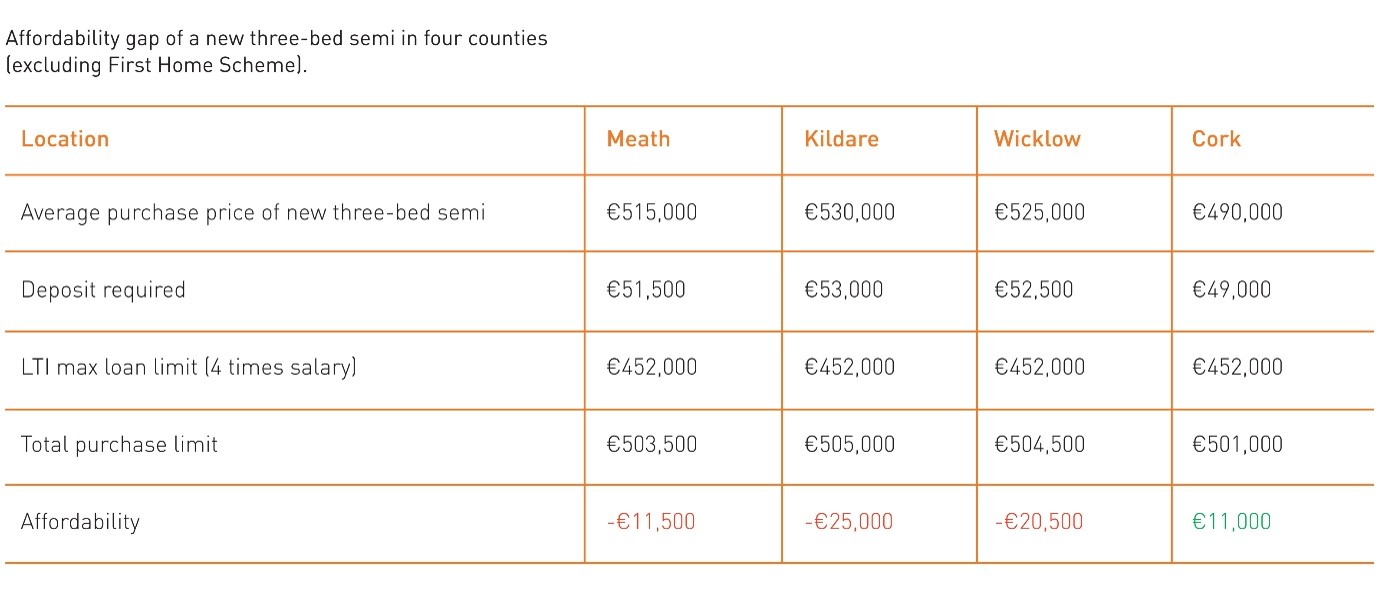
Fig 1 Four scenarios. The purchase prices listed here are median purchase prices of 3 bed semis from our survey based on new housing developments in the four relevant counties.
According to these scenarios, a couple on a combined gross salary of €113K who want to buy a new privately built 3-bedroom semi-detached home and who have the 10% deposit, having availed of the Help to Buy Scheme along with their savings, will afford to buy in only one of the four locations, namely Cork.
The case studies indicate prospective buyers in Kildare will face a shortfall of almost €25,000, in Wicklow it will be €20,500 while in Meath it will be €11,500.
The case studies also include affordability scenarios for two and three-bed terraced houses in the four locations. The picture here is much more positive, with affordability being met in all locations.
Ms Byrne, who lectures in real estate, property economics and sustainability at TU Dublin, says the new figures show that affordability continues to be one of the defining challenges in the country’s residential market, particularly for family homes such as 3-bed semis.
“While a new 3 bedroom semi-detached home is affordable in Cork, new 3-bedroom semi-detached homes in Kildare, Wicklow and Meath remain out of reach for people on these salaries. The pattern agents are seeing is a persistent divergence between income growth and property values, as the marginal gains in purchasing power are offset by property price growth wherever the demand is strongest. In addition, it has to be remembered that there are thousands of people on lower salaries who will not be able to buy and will require support.”
“Affordability remains a significant concern, particularly for first-time buyers seeking family-sized homes in commuter counties. The survey findings suggest that while Government support schemes continue to assist some purchasers, rising house prices have outpaced improvements in purchasing power in several key locations.”
The Rental Sector
While tenancy registration numbers remain at record levels nationally, agents report sustained landlord sales activity and continued exits by smaller rental providers. Survey responses indicate that more agents are experiencing an increase in sales instructions from landlords.
The result is a gradual restructuring of the private rented sector. As smaller landlords exit, ownership is concentrating among large-scale and institutional providers. This shift may weigh most heavily on regional markets, where rental supply remains more dependent on individual landlords than in cities.
Agents say landlords are leaving the market due to a mix of financial and regulatory pressures. The most frequently cited reasons are that rental legislation has become too complex and restrictive, that net rental returns are too low, and that rising values have finally lifted some landlords out of negative equity, removing a barrier to sale.